
Trump and Cotton Demand Action
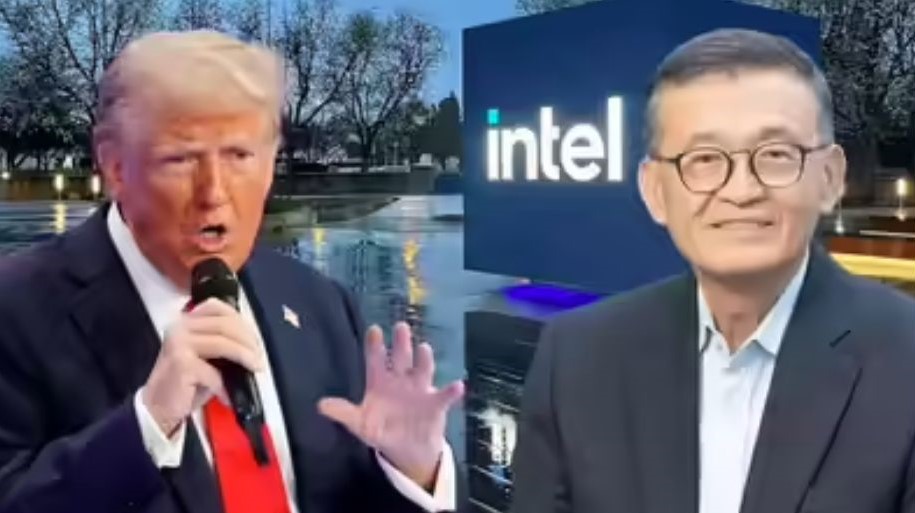
On August 7, 2025, U.S. President Donald Trump posted to his Truth Social account to call on the immediate resignation of Intel CEO Lip-Bu Tan as someone who was highly CONFLICTED because of his alleged connection to Chinese companies. According to the post by the president, the chief executive officer of INTEL is very conflicted and should resign, right now. This problem can be resolved in no other way. Thank you, for having given your attention to this problem!” This was the first-time corporate executive has been called upon to resign over concerns expressed by Republican Senator Tom Cotton who in a letter to Intel board chairman Frank Yeary had expressed his concern over Tan investing in Chinese technology firms some of which are reported to be linked to the Chinese Army.
National Security Concerns
Senator Cotton, the chairman of the Senate Select Committee on Intelligence, has described the financial connections of Tan with alarm, noting that a Reuters April 2025 report showed Tan invested at least $200 million in hundreds of Chinese-based advanced manufacturing and semiconductor companies in the period between 2012 and 2024. Eight or more of these companies are reportedly affiliated with the People s Liberation Army and one may question whether Intel is a responsible steward of American taxpayer dollars considering Intel received more than 8 billion in federal funding under the CHIPS and Science Act and 3 billion in Secure Enclave funding. Cotton cited Council on Foreign Relations colleague Tan, who served as CEO of Cadence Design Systems, which recently pleaded guilty to selling high tech to a Chinese military university in violation of federal export laws and paid a $140 million fine in a letter.
Intel’s Response and Stock Market Impact
Intel has acted against the claims with the words: “Intel, the Board of Directors, and Lip-Bu Tan are devoted to enhancing the national and economic security interests of the United States.” The firm reminded it of heavy investments in local semiconductor development and production, with a new state of the art plants under construction in Arizona. Nevertheless, these statements failed to provide the needed effect on the market, and Trump publicly demanding to observe this and Cotton questioning the company during a hearing resulted in Intel stock plummeting as much as 3-5 percent in premarket and post-market trades on August 7, 2025. Its decline can be attributed to the uncertainty by investors of the controversy and the slow recovery of Intel that still lacks its competitive power in the AI chip market taken by competitors such as Nvidia.
Tan’s Background and Strategic Role
Intel, whose new CEO was named in March 2025 and is a Malaysian-born, naturalized American businessperson who has a legendary career in the tech sector by the name of Lip-Bu Tan. His prior experience includes being the CEO of Cadence Design Systems between 2008 and 2021, growing it tremendously and being a partner at Walden Catalyst Ventures. The fact that Tan spent much time with the global semiconductor industry was also considered to be a strategic advantage when Intel recruited him as the successor of Pat Gelsinger to whom the job was to turn around Intel career after having failed to grab the mobile and AI chip boom. Nevertheless, his heavy investments in Chinese companies, which is not against the law unless linked to individuals and companies on the U.S. Treasury Chinese Military-Industrial Complex Companies List, have been of a political attack as the U.S. security over technology and national security stand on edge with China.
Broader Implications
Trump intervention is a remarkable action considering that it is not commensurate with U.S. president demonstrating publicly to force a CEO of the private sector to resign. The move is part of his wider America first agenda, such as proposed tariff of 100 percent on computer chips imported to increase domestic production. Patrick Moorhead, an analyst with Moor Insights & Strategy, argues that Trump might be using the controversy to exert pressure on other matters referring to Intel tardiness in completing its plans to build factories in the United States. Against this, critics such as investors like Phil Blancato with Ladenburg Thalmann Asset Management note that this form of political involvement has a potential of creating a dangerous precedent on American businesses. In the meantime, Intel is dealing with rising pressures, forced layoffs, and smaller scale global expansion schemes as it runs between market forces and political attention.
Looking Ahead
The leadership that Tan was involved in brings out the ripeness that global commercial relationships experience every now and then with regard to national security interests of the United States. With the possibility that Intel will remain a key component in America as it works towards securing its semiconductor supply chain, the likely conclusion of this political and corporate soap opera could have dire consequences beyond the firm and technology sector, in general. At least, in the current state of affairs Intel has reaffirmed its promise to cooperate with the Trump administration, but there is ever-present pressure on Tan and the company.
Sources: Reuters, Truth Social, Senate Select Committee on Intelligence, Intel Corporation, Bloomberg, U.S. Department of the Treasury, Moor Insights & Strategy, Ladenburg Thalmann Asset Management





Leave a Reply